
What Is Folkstyle Wrestling?
Folkstyle wrestling, also referred to as collegiate wrestling, developed in the United States in the 1800s. It grew out of various local and regional wrestling traditions and became formalized as colleges began adopting it as a competitive sport. By the early 20th century, folkstyle wrestling was recognized as an official collegiate sport, and it spread across high schools nationwide.
Today, it is the foundation of wrestling programs in American schools and colleges, with thousands of athletes competing each year. Many U.S. wrestlers who go on to compete at the Olympic level start in folkstyle before transitioning into freestyle or Greco-Roman.
A Brief History of Folkstyle Wrestling
Folkstyle wrestling, which is also known as collegiate wrestling, started in the U.S. in the 1800s. It started as a mix of several local and regional wrestling styles, and colleges began to use it as a competitive sport. By the early 1900s, folkstyle wrestling was an established sport at colleges, and it spread to high schools all around the country.
It is the basis for wrestling programs in American schools and colleges today, and hundreds of athletes compete in them every year. Many American wrestlers who go on to compete in the Olympics start out in folkstyle and then move on to freestyle or Greco-Roman.
Key Rules of Folkstyle Wrestling
The main goal of folkstyle wrestling is to control your opponent. Competitors receive points for taking down an opponent, fleeing, switching positions, or exposing their opponent’s back to the mat. Matches usually take place on a circular mat.
Folkstyle is different from freestyle in that control and riding time are more important than large throws and exposure. Once you’ve achieved position, you have to stay in control of your opponent.
Most folkstyle wrestling matches include three periods, and the time limitations vary on the level of competition, like high school or college.
Folkstyle Wrestling Positions: Neutral, Top, and Bottom
One of the most crucial things to know is how to start in folkstyle. Wrestlers start either in a neutral position, with both standing and facing each other, or in a referee’s position, with one athlete on top and the other on bottom.
This leads us to an important search topic: what does the neutral position entail in folkstyle wrestling?
In the neutral position, both wrestlers are upright, neither has control, and both are trying to take the other down. People typically think this is the most balanced position because both wrestlers can attack or defend equally well. Wrestlers score from neutral by using moves like double-leg takedowns, single-legs, and throws.
The other two positions are:
- Top position (advantage): Wrestler has control and attempts to keep their opponent down while looking to score near-fall points.
- Bottom position (disadvantage): Wrestler works to escape or reverse control.
These positions are crucial to how folkstyle matches work. They set it apart from freestyle and Greco-Roman, which don’t focus on the same kind of top/bottom control system.
Folkstyle Wrestling vs Freestyle Differences
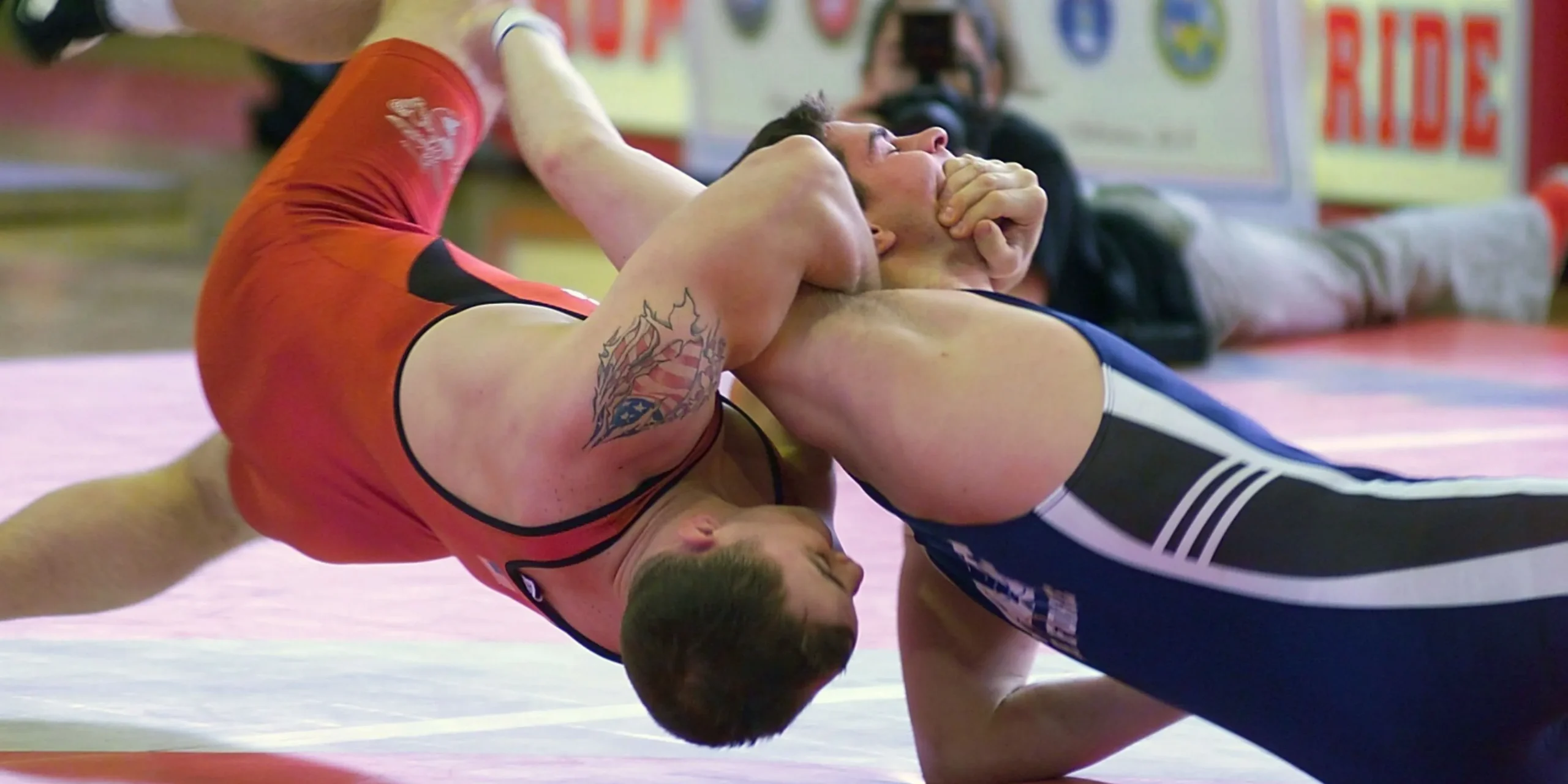
A common question from new fans is about the folkstyle wrestling vs freestyle differences. While both are forms of amateur wrestling, they have very different scoring systems, strategies, and goals.
- Control vs Exposure: Folkstyle rewards controlling an opponent on the mat, while freestyle emphasizes exposing an opponent’s back to the mat, even briefly.
- Scoring: In folkstyle, a takedown earns 2 points, while in freestyle, takedowns may score 2 to 5 points depending on amplitude.
- Time and Periods: Folkstyle matches have three periods; freestyle has two periods of three minutes each.
- Riding Time: Folkstyle uniquely rewards wrestlers who maintain control for longer than 1 minute with a riding time point. Freestyle has no such rule.
- International vs American Focus: Freestyle is an Olympic sport practiced worldwide, while folkstyle is largely limited to the United States.
Both styles build strong fundamentals, but folkstyle’s emphasis on mat control and endurance makes it a distinct experience for athletes.
Understanding Folkstyle Wrestling Scoring System
Another key element is understanding folkstyle wrestling scoring system. The point system is what keeps matches structured and ensures fair competition. Here’s a breakdown:
- Takedown (2 points): Awarded when a wrestler brings their opponent from neutral to the mat and establishes control.
- Escape (1 point): Scored when the bottom wrestler gets away and returns to a neutral position.
- Reversal (2 points): When the bottom wrestler gains control and moves to the top position.
- Near Fall (2–4 points): Awarded when the top wrestler turns the opponent’s back toward the mat at an angle less than 90 degrees for a set time.
- Penalty Points (varies): Given when an opponent commits illegal holds, stalling, or misconduct.
- Riding Time Point (1 point, college only): Awarded to the wrestler who maintains control for more than one minute across the match.
Understanding these rules allows athletes and fans alike to follow the strategy and flow of a match.
Training and Techniques in Folkstyle Wrestling
Training in folkstyle focuses on finding a balance between strength, speed, and technique. Wrestlers commonly undertake drills that focus on takedowns, escapes, reversals, and controlling the mat. Conditioning is another important part of training since being able to keep control over an opponent requires a lot of stamina.
Some commonly used techniques include:
- Double-leg and single-leg takedowns
- Sprawls and counters
- Granby rolls and switches (for escapes and reversals)
- Arm bars and tilts (for near-fall points)
Benefits of Folkstyle Wrestling
There are benefits to folkstyle wrestling that go beyond the mat. Athletes learn how to be disciplined, tough mentally, and fit physically. The activity also teaches you how to solve problems while you’re under stress and makes you stronger.
Folkstyle gives high school and college students the chance to compete at a high level and, often, win scholarships to keep wrestling at the college level.
Folkstyle as a Foundation for Other Styles
Many wrestlers who want to compete internationally go from folkstyle to freestyle or Greco-Roman. Folkstyle wrestling focuses on mat control, which gives athletes a robust foundation in technique and conditioning. Many U.S. Olympic champions began their careers in folkstyle wrestling, but improvements are necessary, particularly in scoring and throws.
Conclusion
So, what is wrestling in the folk style? It is the American style of amateur wrestling that focuses on strategy, positioning, and control. Folkstyle wrestling is still an important element of U.S. sports culture since it has its own scoring system, different positions (like the neutral stance), and is different from freestyle wrestling.
New fans and wrestlers can better comprehend how matches work if they know how the folkstyle wrestling scoring system works and what the neutral position means. It’s easy to see why this technique is different from freestyle wrestling when you look at the contrasts between the two. It still serves as a base for international competition.
Folkstyle wrestling is a fun and challenging sport that offers many opportunities for parents seeing their kids compete, students just beginning, and fans discovering the sport.
You may also want to read this: